THIS IS NOT a great time to be an artsy weirdo.
Hampshire College is closing. If you don't know Hampshire, it's the kind of place that was designed to cultivate artsy weirdos — no grades, no required courses, just a lot of smart, weird kids left to follow their passion and see where it led. I went to Smith, which was a short drive away, and some of the best parties of my life happened at Hampshire. I remember dancing to James Brown late into the night, and, less fondly, I remember the hangover the next morning. My senior year I took a poetry workshop there, and instead of sitting around a seminar table the way I was used to, we met in a small theater with soundproof walls and benches. The vibe was inclusive and vulnerable and very unlike my usual academic experience — and when the school year ended, I felt bereft.
Hampshire isn't alone. The places that have historically sheltered artsy weirdos and allowed experimentation to happen are disappearing across the country, and the economics are brutal. The cost of an artistic education has more than doubled in a generation, and that's before you factor in everything that comes after: studio space, materials, rent in a major city.
I've been thinking about all of this since reading New York Real Estate And The Ruin Of American Art, a recent essay by Josh Kline, an artist whose work I've admired for a long time. I included Josh in a show I curated in 2014 called "As I Was Saying," featuring artists who were revisiting identity politics of the 80s and 90s and updating it for our times, and even then he was asking hard questions about labor, precarity, and who gets to survive in this economy. His new essay feels like a direct extension of that work, except now the subject is artists. He methodically catalogs the ways New York City has become uninhabitable for them — and he's transparent about art-world machinations in a way most of these pieces aren't, factoring in not just rent and materials but the expense of showing up to the openings and dinners where careers actually get made. The art world places enormous pressure on young artists to be present in New York to entertain what Kline calls "career bouncers." An aspiring artist, he writes, is forced to act "as a nightlife safari guide for aging curators." Though he comes down hard on blue-chip galleries and risk-averse collectors, his conclusion is oddly narrow, addressing young artists directly. He urges young artists to let go of dreams of New York galleries and museums, to de-center the city entirely, and to build new communities and new kinds of art on their own terms, literally everywhere else. Save yourselves, he says, and get out of New York.
The last time artists left a major city en masse was Berlin in the 1930s. That's the context we're operating in.
Whenever I read a "wither the art world" piece, I think about the artists Mary Gabriel wrote about in 9th Street Women: Joan Mitchell, Grace Hartigan, Elaine DeKooning, Lee Krasner, and Helen Frankenthaler. They came of age during the Depression era, when New York, as she writes, "had for many an end-of-days aspect that transfigured the city and the people in it." Enterprise was replaced by survival. Elaine de Kooning described the nights when she and Bill had no food, no money, and no heat: "we got into bed . . . and I read aloud to Bill from the cookbook. And we imagined what it would be like to eat fancy things, and that was our dinner."
Gabriel’s book is a useful corrective to the nostalgia for a lost golden age in which artists flourished and were well cared for. The New York art world of the 40s and 50s (which really was a kind of golden age, though primarily for white male artists) didn't emerge because artists were resilient enough to survive without help. It happened because desperate people in the 1930s organized and demanded that the government act. Artists marched alongside dockworkers and sweatshop employees. When told that painters were starving and needed federal help, President Franklin Delano Roosevelt shrugged and said, "Why not?" — and the Federal Art Project was born. It didn't just keep artists alive. It created community where none had existed, brought isolated people into contact with each other, and for the first time gave artists a government-recognized place in public life. In 1944, the GI Bill helped veterans pay for art school. Both programs were also, predictably, inequitable: Black artists were systematically excluded from New Deal benefits, and Black veterans were steered away from education funding. And yet the overall economic conditions those programs generated still created openings that wouldn't otherwise have existed. This is not an argument that the exclusion was acceptable — it wasn't, and the wealth gap it produced is still with us. It's an argument that the mechanism worked, and that a version of it rebuilt without those exclusions could work better. There's no structural reason a new WPA has to replicate the old one's injustices.
If there is one thing I wish Josh had included in his essay, it’s that the absence of spaces that welcome weirdness and experimentation doesn't just hurt artists. It impoverishes all of us, leaving us with the sort of tired Neo-fascistic architecture being built in Washington right now. What we need isn't for artists to relocate or go online for community. We need the kind of collective organizing that pressures the state to invest in improving the lives of its citizens and make a creative life possible — for everyone, not just the people history decided to let in.
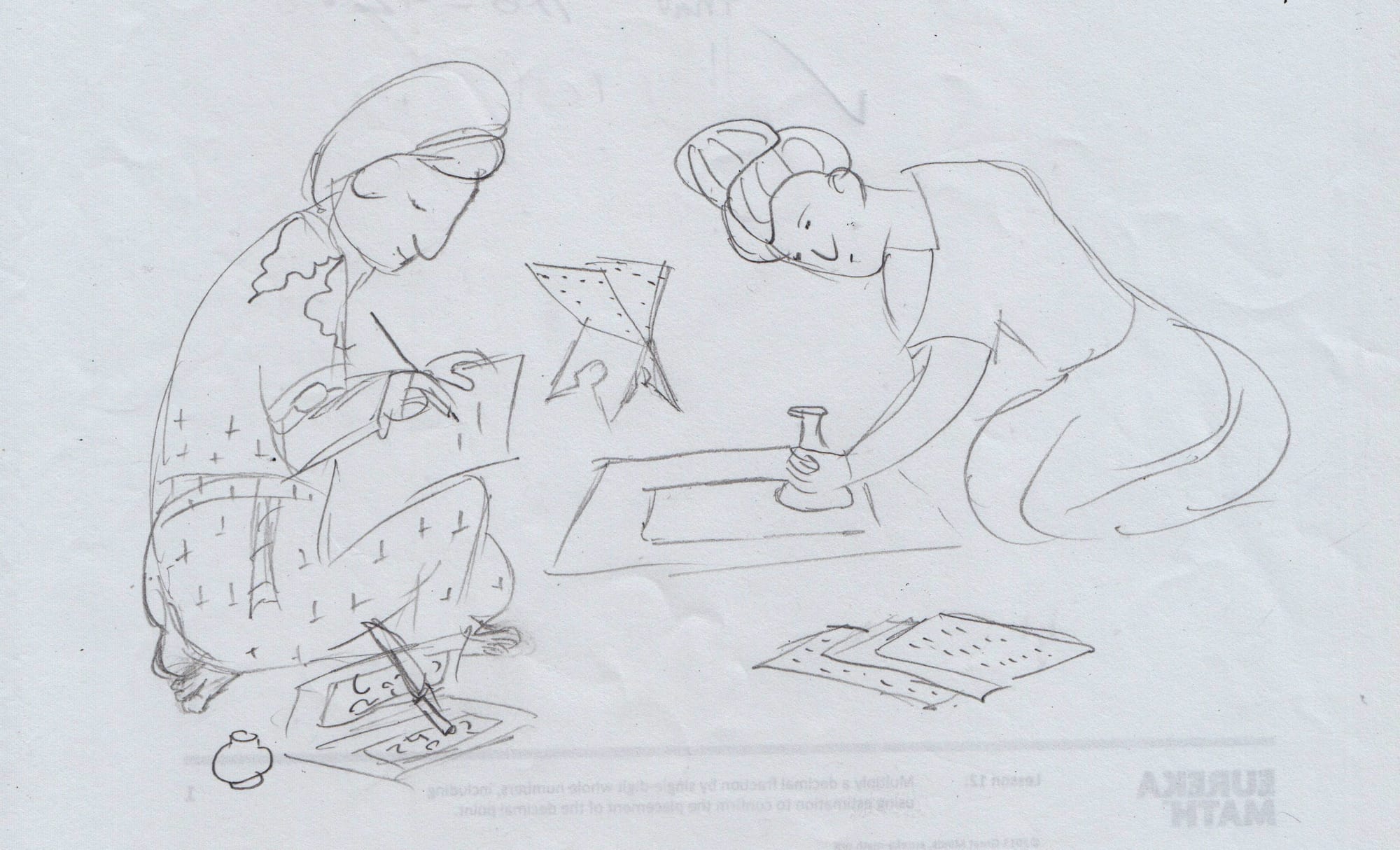
This is a sketch from a comic I have been working on for a while now. I set it aside but returned to it recently because it is about the creation, and dismantling, of the The Shahnāma of Shah Tahmasp, a beautifully illustrated manuscript of the Book of Kings. Not sure yet what I'll do with it, but it seems like the right time to finish and share it.
Three Things Keeping Me Going This Week
- Henry David Thoreau, by famous Hampshire graduate Ken Burns. I have only watched the first two episodes but already appreciate the rebranding of Henry as a politically engaged activist rather than a quirky pencil-making hermit. In addition to discussing his love of nature, the documentary points to the ways that he was invested in undoing the harm of slavery and the unchecked greed of industrialists. And the documentary still includes plenty of Henry's quirks.
- "There was only one thing we could do: plug in the portable radio into the car batteries, put on some disco music and dance." A must-read essay, "A Childhood in Lebanon, In Spite of War," by Friend of Mushroom Head writer Nana Asfour, about being a kid during the Civil War in Lebanon. Nana's writing is so sweet, so endearing, that when she writes about a moment when the safety of her family was under extreme risk I found myself actually holding my breath. This essay conveys so much about the strength of community and good will for others and human ingenuity and just plain old love for life—all of the ingredients needed to make a whole and peaceful world.
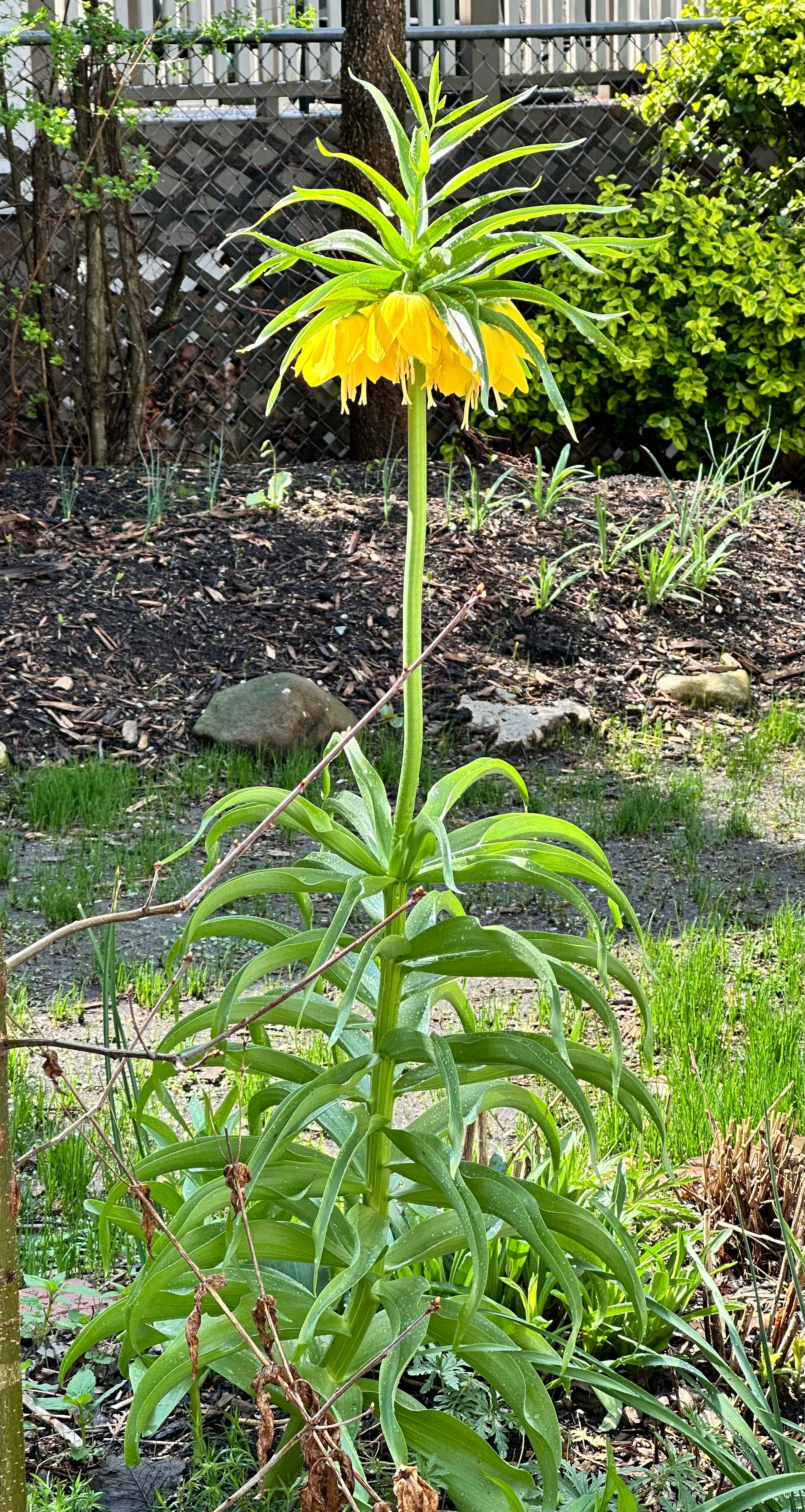
- My yellow crown imperial lily bloomed! It took three years, but it was worth the wait.
Also, on a sadder note, R.I.P. Celeste Dupuy Spencer. This one hurt. It's a good day to check in on someone you care about, invite them for a walk, and enjoy the sunshine.
Love,
Claire